
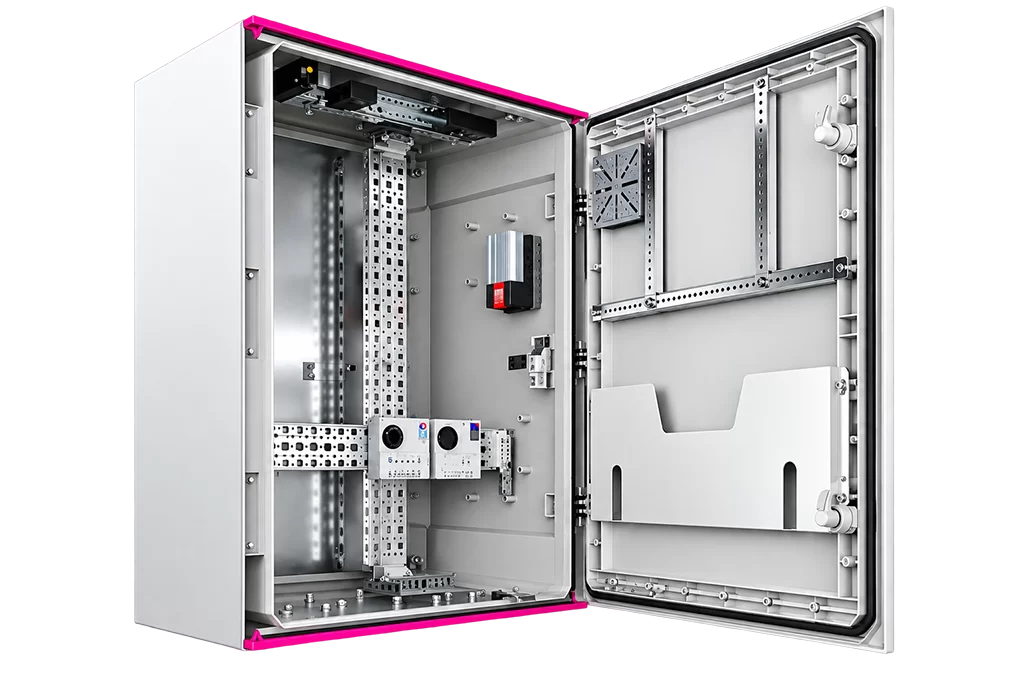
Latches for electrical enclosures and control cabinets do more than simply keep the door closed. The locking system can affect sealing performance, vibration resistance, access control, maintenance efficiency and the long-term reliability of the enclosure.
From indoor control cabinets to outdoor electrical enclosures and industrial equipment housings, the correct latch should be selected according to the operating environment, door construction and required level of protection. This guide explains the key factors to consider when comparing cam latches, compression latches and multi-point locking systems.
1. Start with the Application Environment
Before selecting a latch, determine where and how the enclosure will be used. The installation environment influences the required material, sealing performance, operating method and resistance to vibration.
- Indoor or outdoor installation
- Exposure to dust and water
- Temperature and weather conditions
- Vibration and shock
- Corrosive environments
- Frequency of maintenance access
- Required access control
- Door size and construction
A latch used on a stationary indoor control cabinet may have very different requirements from one installed on outdoor machinery or transportation equipment.
2. Cam Latches for Simple and Fast Access
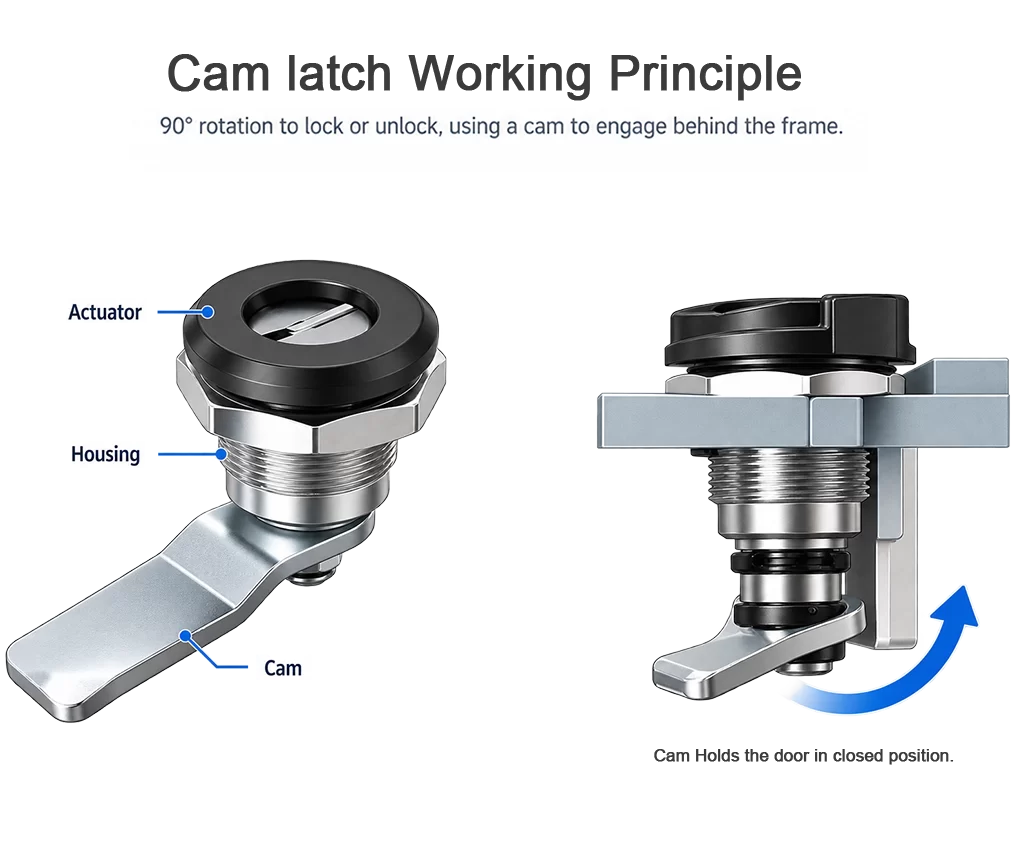
Cam latches are widely used for electrical cabinets, control panels, machine enclosures and access doors. The basic mechanism uses a cam positioned behind the enclosure frame. Rotating the actuator approximately 90 degrees moves the cam between the open and closed positions.
- Fast operation
- Compact construction
- Simple installation
- A wide range of cam and grip configurations
- Multiple actuator options
- Suitability for frequently accessed panels
Cam latches are particularly suitable when straightforward panel retention and convenient maintenance access are the main requirements. Tool-operated, key-operated and hand-operated actuators can be selected according to the required level of access control.
3. When Should You Use a Compression Latch?
For applications involving vibration or sealing requirements, a compression latch may be more appropriate. Unlike a conventional cam latch, which primarily rotates the cam into the locked position, a compression mechanism creates additional axial movement during the final stage of closing.
This movement pulls the door toward the enclosure frame and applies controlled pressure to the gasket. Compression latches can help provide:
- Consistent gasket compression
- Reduced panel movement
- Reduced rattling under vibration
- Improved resistance to unintended opening
- Better sealing performance
- Secure retention in demanding applications
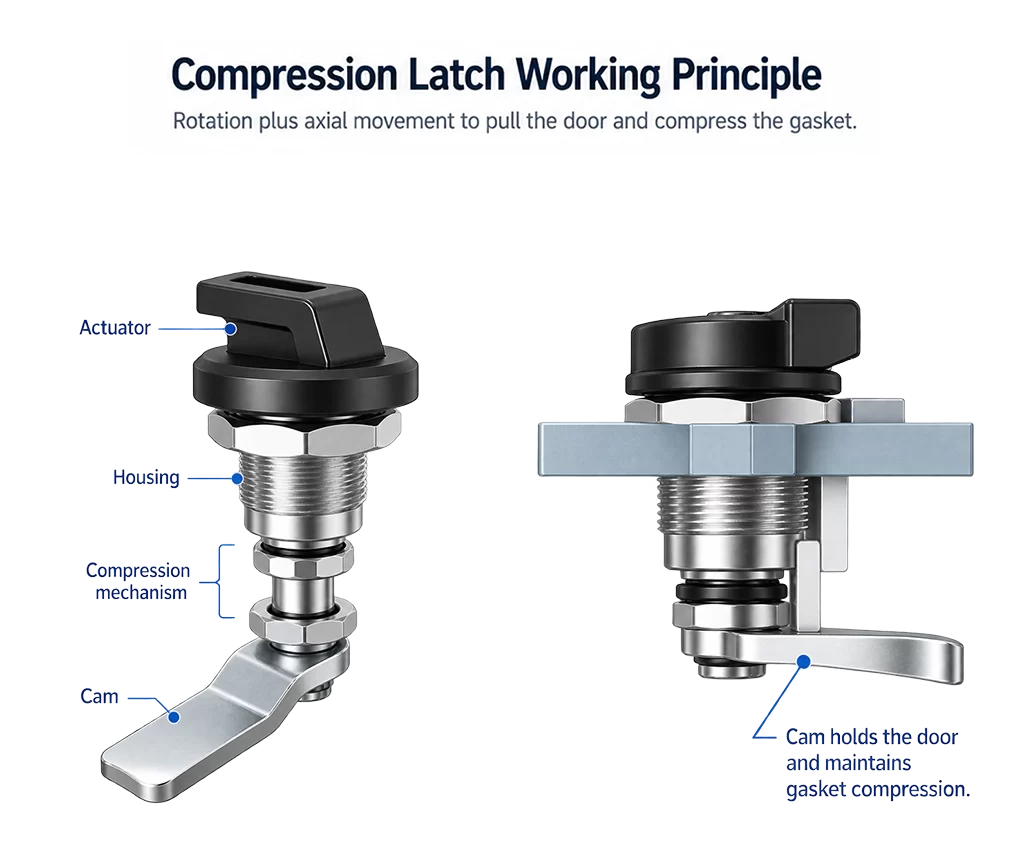
Compression latches are commonly considered for outdoor enclosures, mobile equipment, industrial machinery and other applications where vibration, dust or water exposure must be taken into account. However, the latch alone does not determine the IP rating of an enclosure. The complete enclosure system—including the door, gasket, hinges, joints, cable entries and other interfaces—must be designed and tested appropriately.
4. Consider the Required Grip Range
Grip is one of the most important dimensions when selecting a cam latch. In simplified terms, the required grip depends on the distance between the mounting surface of the door and the surface engaged by the cam.
- Door thickness
- Frame geometry
- Gasket thickness
- Compression requirement
- Cam shape
- Mounting configuration
Selecting the wrong grip can result in insufficient locking force or prevent the latch from closing correctly. For multiple panel configurations, an adjustable grip or adjustable cam design can provide greater installation flexibility.
5. Panel Thickness and Cutout Dimensions
A latch must be compatible with the physical construction of the enclosure. Before specifying a product, check the following:
- Panel thickness: confirm that the latch body and mounting system support the actual door thickness.
- Panel cutout: check the required cutout dimensions carefully. Even visually similar latch designs may use different mounting holes or cutouts.
- Available installation depth: make sure sufficient clearance is available behind the panel for the latch body, cam and surrounding components.
- Cam orientation: verify the required rotation direction and final cam position.
For replacement projects, measure the existing panel cutout before selecting a new latch.
6. Sealing and IP Protection
Outdoor and industrial electrical enclosures frequently require protection against dust and water. IEC 60529 defines the IP Code used to classify the degree of protection provided by electrical enclosures.
The latch can contribute to the sealing system by maintaining appropriate pressure between the enclosure door and gasket. Compression latches are particularly useful when controlled gasket compression is required. Specifying an IP-rated latch does not automatically give the complete enclosure the same IP rating; the final protection level depends on the complete enclosure design and should be verified for the finished assembly.
7. Vibration and Shock
Vibration is an important consideration for machinery, transportation equipment, generators and other mobile or dynamic applications. Repeated vibration can cause:
- Panel movement
- Rattling
- Loss of gasket compression
- Wear at contact surfaces
- Unintended movement of unsuitable locking mechanisms
Compression latches can reduce movement between the door and frame by maintaining clamping force after closing. For demanding applications, evaluate the complete latch installation—not only the latch itself—under the expected vibration and shock conditions.
8. Choosing the Right Material
Zinc Alloy
Zinc alloy provides a practical combination of mechanical strength, manufacturing flexibility and cost efficiency. It is widely used for industrial cabinets and general equipment applications and can be supplied with different surface finishes.
Stainless Steel
Stainless steel should be considered when corrosion resistance is a major requirement. Typical applications include:
- Outdoor equipment
- Food processing equipment
- Transportation
- Marine environments
- High-humidity locations
- Industrial equipment exposed to aggressive environments
Select the required stainless-steel grade according to the actual corrosion environment rather than assuming that all stainless steels provide identical performance.
9. Select the Appropriate Access Method
The method used to operate the latch should match the application and the people who need access.
- Tool-operated: suitable for service panels and technical enclosures where casual access should be restricted.
- Key-operated: provides controlled access for cabinets containing valuable or sensitive equipment.
- Hand-operated: suitable where frequent access and convenience are more important than restricted access.
- Padlockable: can provide an additional physical access-control option for certain industrial applications.
The correct solution depends on who needs access, how frequently the enclosure is opened and the required security level.
10. When Is Multi-Point Locking Necessary?
A single locking point may not provide uniform retention on a large or tall enclosure door. As door dimensions increase, the panel may flex and gasket compression may become uneven.
Multi-point locking systems distribute locking force across multiple positions around the door. They can be useful for:
- Tall electrical cabinets
- Large enclosure doors
- Wide access panels
- Applications requiring more uniform gasket compression
- Doors susceptible to deformation or vibration
The decision should be based on door stiffness, dimensions, gasket design and required sealing performance rather than door size alone.
Explore Mineon’s Latch Categories
These representative solutions help illustrate the differences between cam, compression and multi-point locking approaches. Open a category to compare available configurations.
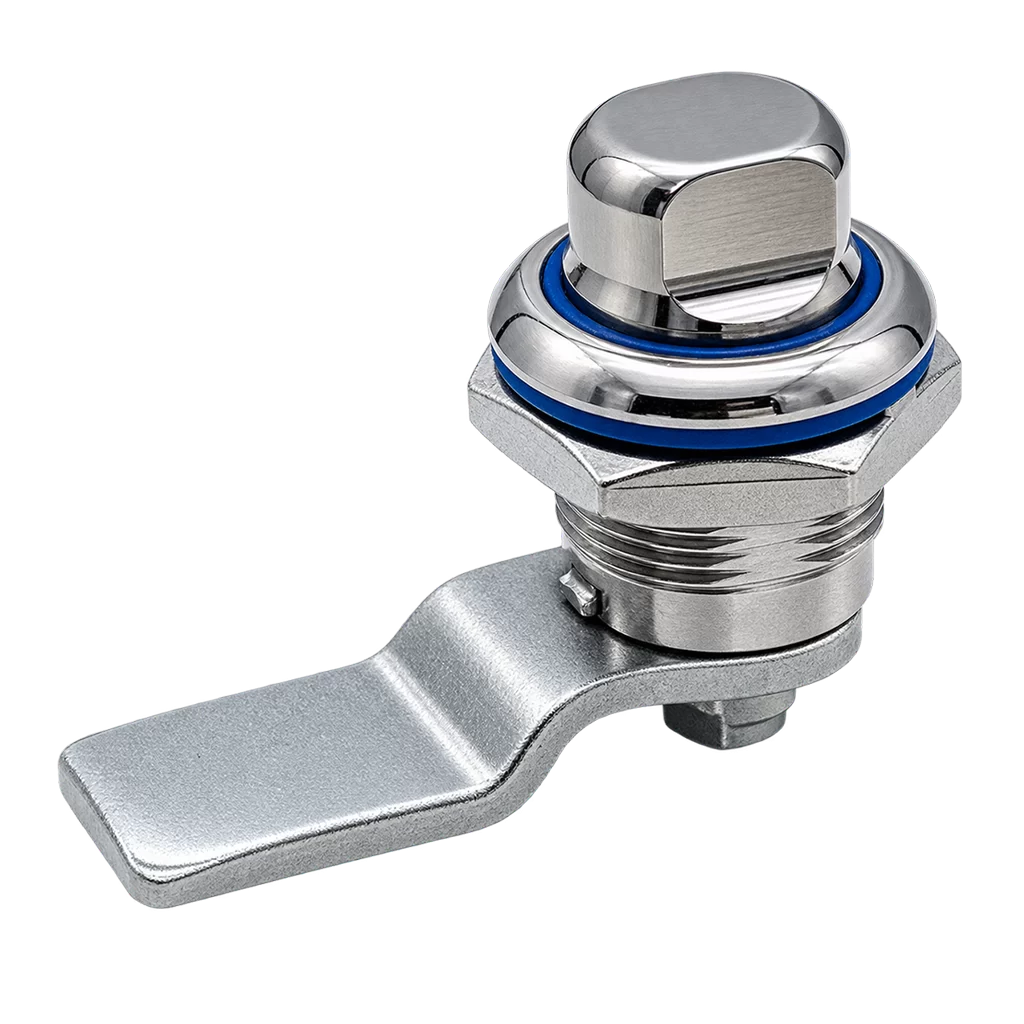
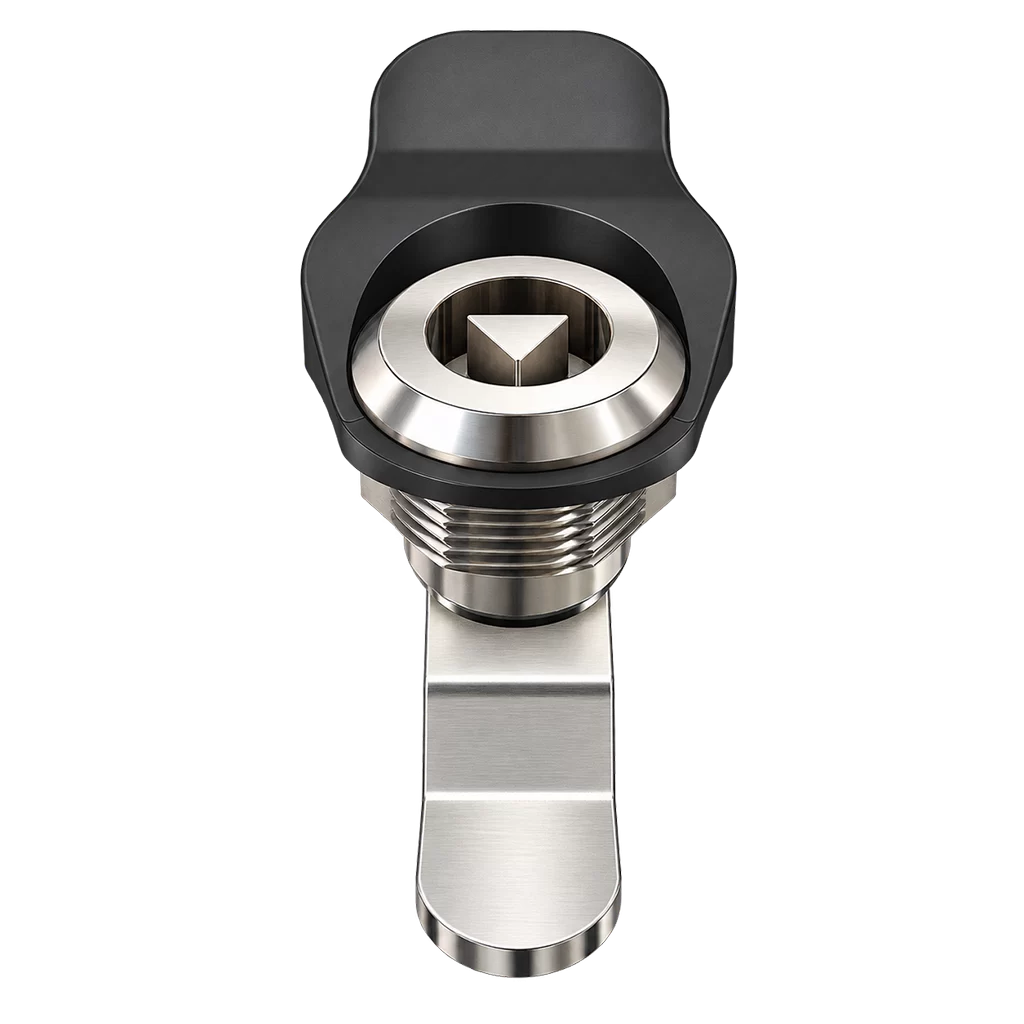
Cam Latch Solutions
Compact quarter-turn locking for electrical cabinets, access panels and equipment housings.
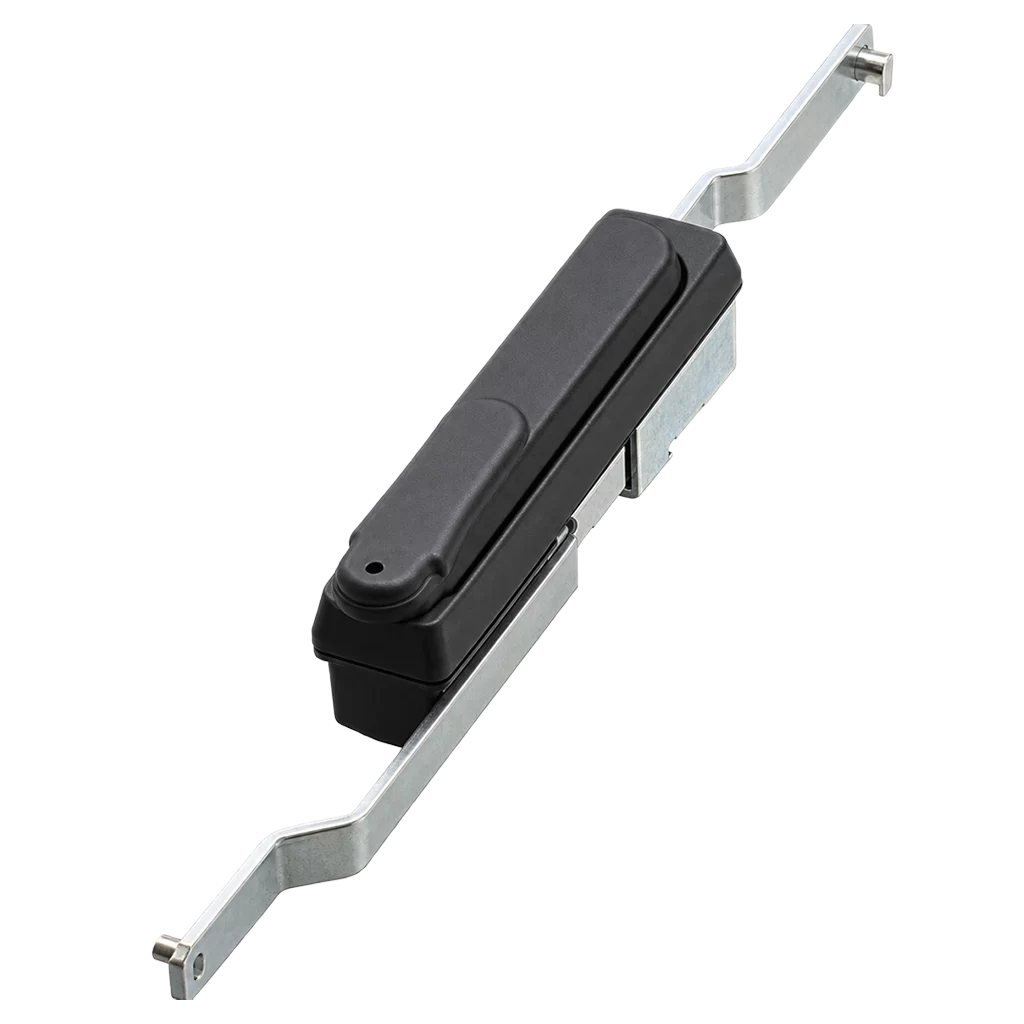
Compression Latch Solutions
Controlled gasket compression and secure retention for vibration-prone or outdoor applications.
Multi-Point Locking Solutions
Distributed locking force for large doors, tall cabinets and panels requiring more uniform retention.
Quick Selection Guide
| Solicitud | Typical latch solution | Main consideration |
|---|---|---|
| Indoor control cabinet | Cam latch | Fast and simple access |
| Service access panel | Cam latch | Frequent maintenance |
| Outdoor electrical enclosure | Cierre por compresión | Sealing and gasket compression |
| High-vibration equipment | Cierre por compresión | Panel retention and reduced rattling |
| Large cabinet door | Multi-point locking | Distributed locking force |
| Restricted-access cabinet | Keyed or tool-operated latch | Access control |
| Corrosive environment | Stainless-steel latch | Corrosion resistance |
Final Selection Checklist
- Application environment
- Door and panel thickness
- Required grip range
- Panel cutout
- Installation depth
- Gasket compression
- Dust and water protection requirements
- Vibration and shock conditions
- Material and surface finish
- Access method
- Locking direction
- Required number of locking points
A properly selected latch should work as part of the complete enclosure system rather than as an isolated component.
Need Help Selecting the Right Latch?
Mineon offers industrial locking solutions for electrical enclosures, machinery, transportation equipment and other demanding applications, including cam latches, compression latches, handle locks and multi-point locking solutions. If you are unsure which configuration is suitable, provide your panel dimensions, grip range, operating environment and locking requirements so our team can help identify an appropriate solution.
Read our stories to find out how to address your Industry Challenges
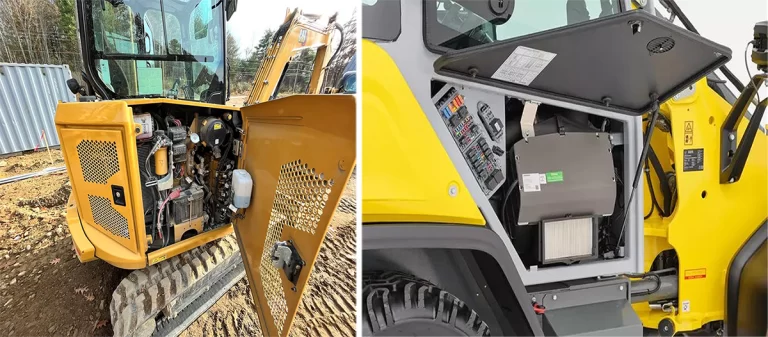
Access Hardware for Construction and Heavy Equipment: Latches, Hinges and Handles
Learn how cam latches, exposed hinges, bow handles and paddle latches are used on construction and heavy equipment, and what to consider…
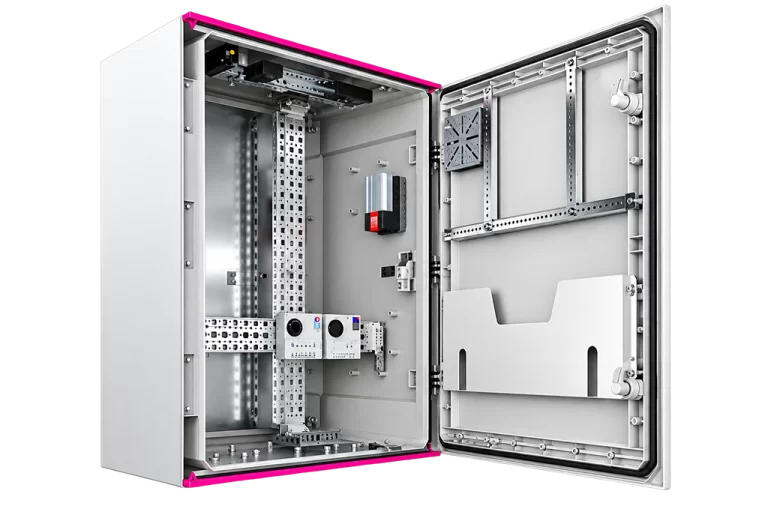
How to Select Latches for Electrical Enclosures and Control Cabinets
Learn how to choose cam, compression and multi-point latches for electrical enclosures and control cabinets based on sealing, vibration, grip range, materials…
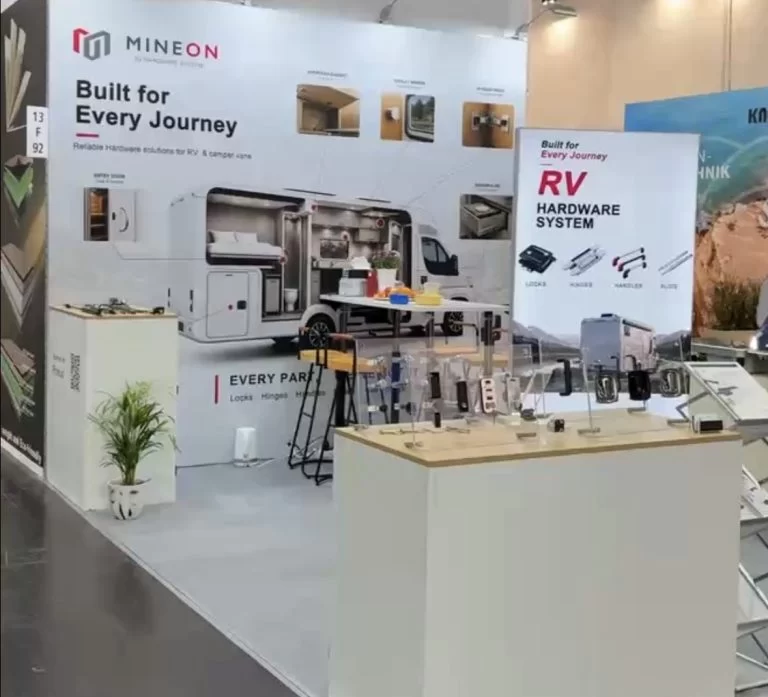
Mineon at CARAVAN SALON Düsseldorf 2026: Connecting with the Global RV Industry
Mineon has successfully concluded its participation in CARAVAN SALON Düsseldorf 2026 (held from August 28 to September 6).As the world’s leading trade…
